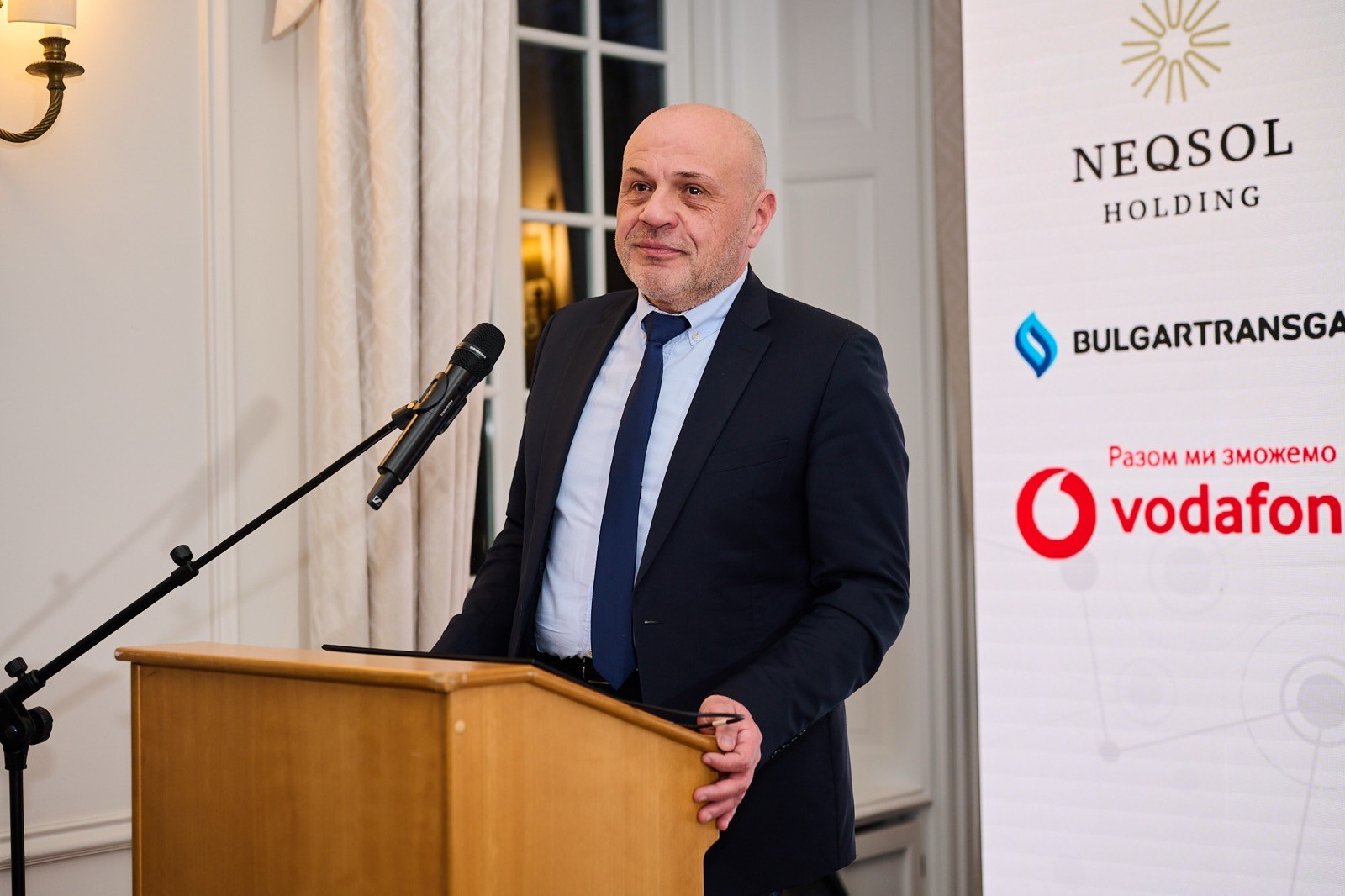
Deputy Prime Minister and Minister of Innovation and Growth Tomislav Donchev attended a presentation of the Kardesa submarine internet infrastructure project, described as a major telecommunications initiative that would position Bulgaria on one of the shortest and most resilient data routes between Europe and Asia.
The strategic initiative is billed as reinforcing Bulgaria’s role as a hub for AI, cloud technologies, and data centres in Southeastern Europe. The estimated investment in the Black Sea submarine cable alone exceeds EUR 100 million, with Vodafone and NEQSOL Holding named as the principal investors.
Implementation in Bulgaria is planned in three phases:
The Aheloy landing station as the cable’s entry point into Bulgarian territory;
A new national fibre-optic backbone linking Aheloy and Sofia, comprising nearly 1,200 km of newly built network and a route roughly 50% shorter than existing telecommunications corridors;
The Kardesa submarine cable itself, a high-tech system spanning roughly 1,700 km, designed to deliver direct, high-capacity, independent connectivity across the Black Sea.
Donchev said the fibre network connecting Sofia with Türkiye, Georgia, and Ukraine would support Bulgaria’s development as a digital hub and enable the establishment of data centres in the country. He added that the government is backing the project because it opens up opportunities to develop AI centres in Bulgaria.
___________
*KARDESA is described as a next-generation submarine telecommunications system across the Black Sea connecting Bulgaria and Georgia, with branches to Turkiye and Ukraine. It is part of a wider corridor running through Georgia, Azerbaijan, the Caspian Sea, and Kazakhstan toward Central and East Asia, the so-called Digital Silk Road.